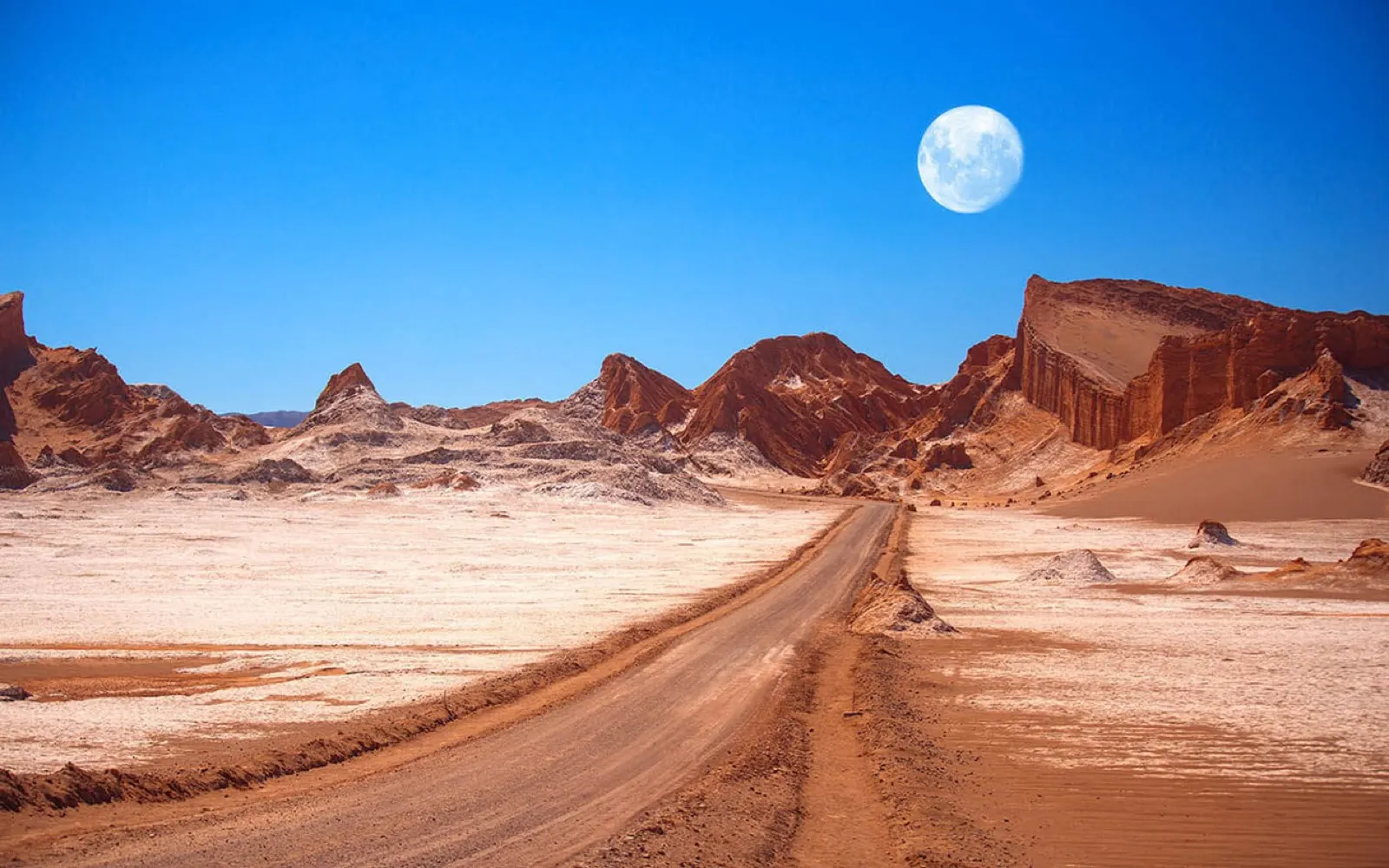
San Pedro de Atacama: how many days you need and how to get there
San Pedro de Atacama is a small village of adobe houses in northern Chile, 2,400 metres above sea level in the heart of the Atacama Desert. The Andes surround it with volcanoes rising over six thousand metres, and its location — close to the Salar de Atacama and the Bolivian and Argentine borders — made it first a crossroads for the caravans of the ancient Atacameño people, and today the base for exploring one of the most extreme landscapes on the planet.
What to see
Excursions run from the village itself. The classics are the Valle de la Luna at sunset, with its salt and clay formations; the Tatio geysers at 4,300 metres, before dawn, when the steam is at its densest; the Salar de Atacama and the Miscanti and Miñiques lagoons up on the altiplano; and the Cejar and Piedra lagoons, where the high salinity lets you float.
Altitude and health
Acclimatisation matters: it’s best to keep the first days low-key and drink plenty of water. Excursions above 4,000 metres are demanding for travellers with heart or blood-pressure issues.
When to go
The best time to go is March to May and September to November: clear days, mild temperatures and fewer visitors. Austral winter is cold at night but crystal-clear; January and February can bring altiplano rains — the “Bolivian winter” — that close some roads.
Stargazing and how to combine it
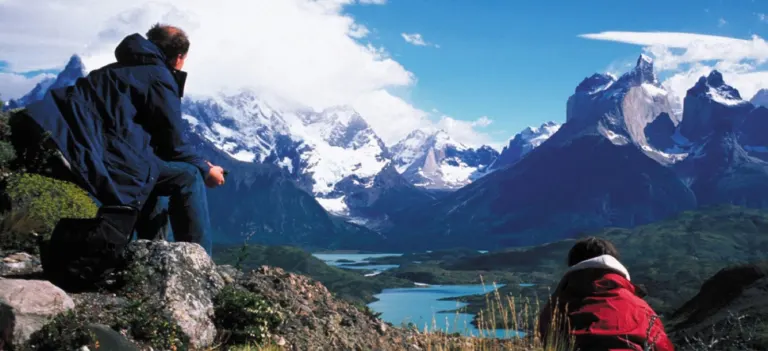
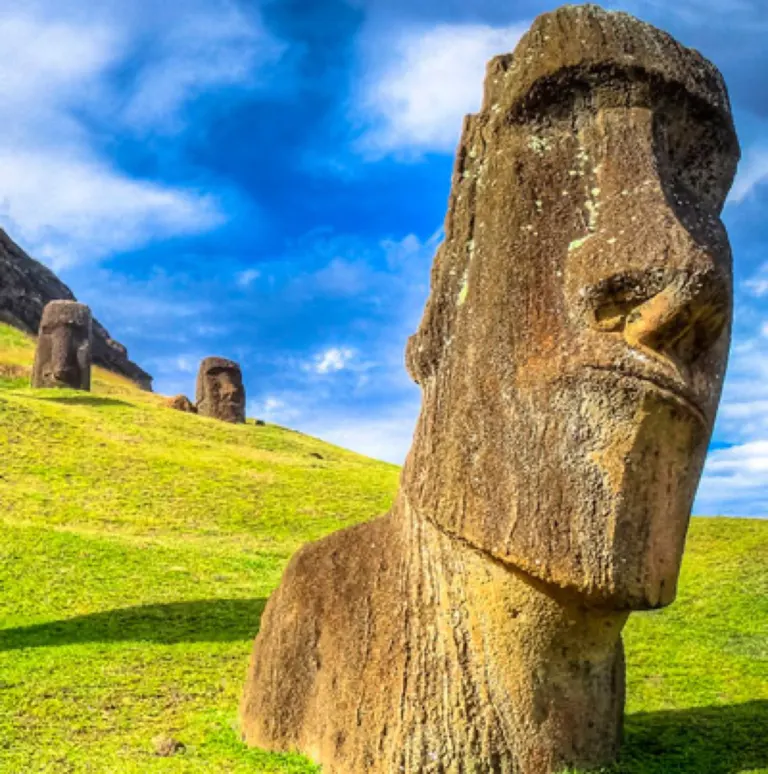
The Atacama sky is one of the cleanest in the world: this is where the ALMA and Paranal observatories operate. Several outfits run guided astronomy tours that are absolutely worth the time if the sky is clear. San Pedro pairs well with Torres del Paine and Easter Island for a trip that crosses Chile north to south.
How many days do you need in San Pedro de Atacama?
Three nights is the minimum. Four is comfortable. And the reason is medical, not just logistical: San Pedro sits at 2,400 metres, but the excursions climb to 4,300 at the El Tatio geysers and above 4,000 at the altiplanic lagoons.
Which is why the order matters more than the number of days. You don’t go high on day one. Day one is for the Valle de la Luna, which sits at roughly the same altitude as the town, and it doubles as acclimatisation. The geysers — which also mean a 4am start — belong on day two or three, never the first. Skip this and you’ll likely spend day two in your hotel with a headache.
A split that works: day one Valle de la Luna at sunset, day two El Tatio before dawn and the village of Machuca, day three altiplanic lagoons and Piedras Rojas, plus an extra night if you want stargazing without stacking early mornings.
Getting there from Santiago
You fly to Calama — El Loa airport, about two hours from Santiago — and from there it’s an hour and a quarter by road to San Pedro. There are several daily frequencies with LATAM, JetSMART and Sky.
Two practical details that save trouble: arriving at night isn’t worth it, because the transfer to San Pedro crosses unlit desert; and give yourself margin on the return flight, since the road out of town has winding stretches and speed enforcement is strict.
There is an overnight bus from Santiago, but it’s over 20 hours: justified only on a tight budget with time to spare.
Atacama and Patagonia on the same trip?
It’s the question we’re asked most, and the answer is yes, but you need at least ten days. They are the country’s two extremes and there’s no direct connection between them: everything routes through Santiago.
The realistic shape is Atacama first — three or four nights — back to Santiago, then a flight to Punta Arenas and on to Torres del Paine for another three or four. Ten days makes it tight but workable; twelve makes it enjoyable.
One seasonal note that decides the order: Patagonia dictates. It only runs fully between October and April, whereas the Atacama works year-round. If you’re travelling outside that window, the north stands on its own and Patagonia is better swapped for the central region or the Lake District.
Common planning mistakes
- Scheduling El Tatio on day one. The most common mistake and the one that ruins most trips. The geysers are at 4,300 metres and acclimatisation can’t be improvised.
- Underestimating the cold. The driest desert on earth is below freezing at El Tatio at dawn, even in January. You need real warm layers, not a light jacket.
- Stacking excursions without a break. Between altitude, sun and early starts, three consecutive full-day tours will exhaust anyone.
- Leaving stargazing for a full-moon night. The Atacama sky is among the best on the planet, but under a full moon you’ll see very little. Check the lunar calendar before fixing dates.
Want to include the Atacama Desert in your trip?
We design private 7 to 15 day itineraries across Chile, with transport, guides and hotels coordinated. Local receptive operator since 1992.